Get your patient on Trutakna (Atacicept)
Trutakna prescribing information

INDICATIONS AND USAGE
TRUTAKNA is indicated to reduce proteinuria in adults with primary immunoglobulin A nephropathy (IgAN) at risk for disease progression.
This indication is approved under accelerated approval based on reduction of proteinuria. It has not been established whether TRUTAKNA slows kidney function decline over the long-term in patients with IgAN. Continued approval for this indication may be contingent upon verification and description of clinical benefit in a confirmatory clinical trial.
DOSAGE AND ADMINISTRATION
- 150 mg once weekly by subcutaneous injection. (2.2 )
Recommended Dosage
The recommended dosage of TRUTAKNA is 150 mg injected subcutaneously (SC) once weekly.
Missed Doses
If a dose is missed, administer the missed dose as soon as possible and then resume once weekly dosing thereafter, one week from administration of the missed dose.
Preparation and Administration Instructions
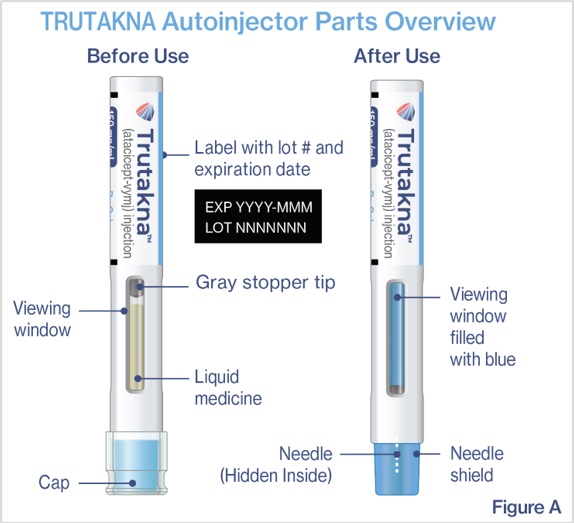
- TRUTAKNA autoinjector is intended for SC administration by patients/caregivers at home. The TRUTAKNA “Instructions for Use” contains more detailed instructions on the preparation and administration of TRUTAKNA [see Instructions for Use ] .
- Remove TRUTAKNA autoinjector from the refrigerator and allow it to sit for 15 to 30 minutes at room temperature between 15°C to 25°C (60°F to 77°F) prior to injecting.
- Do not use an external heat source to heat TRUTAKNA, because heat may damage the product.
- If needed, TRUTAKNA autoinjector may be stored at room temperature up to 25°C (77°F), for a single period of 3 days (72 hours). Once TRUTAKNA has been stored at room temperature, it should not be placed back into the refrigerator. Discard the autoinjector if not used within this 72‑hour period.
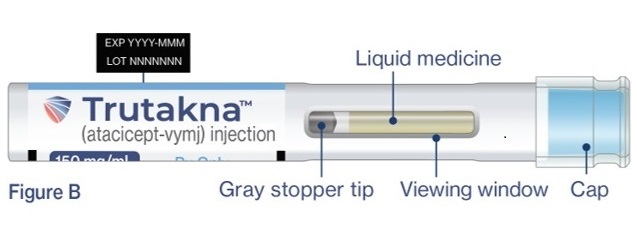
- Parenteral drug products should be inspected visually for particulate matter and discoloration prior to administration, whenever solution and container permit. TRUTAKNA should appear as a clear to slightly opalescent, brownish-yellow solution. Do not use if the liquid contains particles or is cloudy.
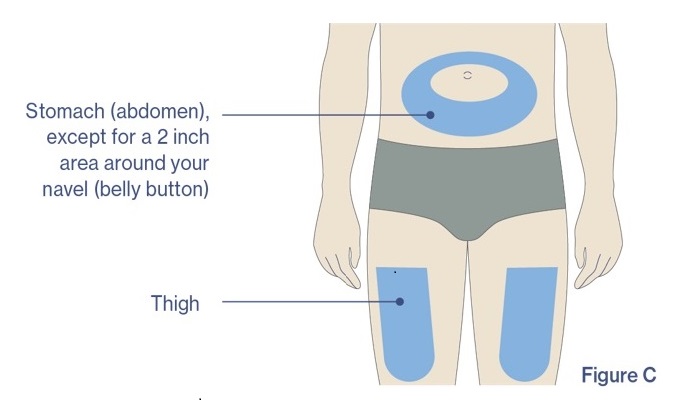
- Administer each injection at a different location than the previous injection. Sites for injections include the abdomen and thigh.
DOSAGE FORMS AND STRENGTHS
TRUTAKNA is a clear to slightly opalescent, brownish-yellow solution, free of visible particles, available as follows:
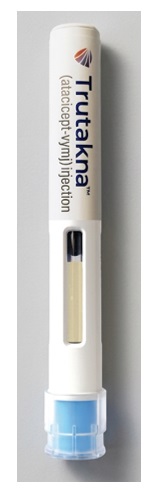
- Injection: 150 mg/mL in a single-dose pre-filled autoinjector
USE IN SPECIFIC POPULATIONS
Pregnancy
Risk Summary
Available data on TRUTAKNA use in pregnant women exposed during clinical trials are insufficient to evaluate for a drug-associated risk of major birth defects, miscarriage, or other adverse maternal or fetal outcomes. Based on mechanism of action, TRUTAKNA may cause immunosuppression in the in utero-exposed infant [see Warnings and Precautions (5.1 and 5.2 ), Clinical Pharmacology (12.1 ) and Clinical Considerations ] . There are risks to the mother and infant with untreated IgAN nephropathy in pregnancy (see Clinical Considerations ) .
In animal reproduction studies, no treatment-related malformations were observed in mice and rabbits at atacicept-vymj exposures approximately up to 12 times and 4 times, respectively, the clinical exposure at the recommended human dose (RHD) (see Data ).
The background risk of major birth defects and miscarriage for the indicated population is unknown. All pregnancies have a background risk of major birth defects, loss, or other adverse outcomes. In the U.S. general population, the estimated background risk of major birth defects and miscarriages in clinically recognized pregnancies is 2% to 4% and 15% to 20%, respectively.
Pregnant women exposed to TRUTAKNA, or their healthcare providers, should report TRUTAKNA exposure by calling 1-833-633-8372.
Clinical Considerations
Disease-Associated Maternal and/or Embryo/Fetal Risk
IgAN in pregnancy is associated with adverse maternal outcomes, including increased rates of cesarean section, pregnancy-induced hypertension, pre-eclampsia and preterm delivery, and adverse fetal/neonatal outcomes, including stillbirth and low birth weight.
Fetal/Neonatal Adverse Reactions
Based on mechanism of action, TRUTAKNA may cause immunosuppression in the in utero exposed infant. The potential clinical impact of TRUTAKNA exposure in infants exposed in utero should be considered.
Data
Animal Data
In pregnant mice, SC administration of atacicept-vymj once every two days (0, 5, 20, and 80 mg/kg) throughout organogenesis from gestation day (GD) 6 to 15 did not result in any adverse effects on embryofetal development at up to 80 mg/kg, approximately 12 times the clinical exposure at the RHD based on area under the concentration curve (AUC).
In pregnant rabbits, SC administration of atacicept-vymj once every two days (0, 5, 20, and 80 mg/kg) throughout organogenesis from GD 6 to 18 resulted in early and late resorptions, reduced number of live fetuses, and decreased mean fetal weight at ≥20 mg/kg, doses that resulted in maternal toxicity (reduced body weight gain). Exposures at these doses were ≥4 times the clinical exposure at the RHD, based on AUC. Embryofetal malformations (enlarged bregmatic fontanella, severe reduction of ossification of parietal or frontal bones, and unossified interparietal bones) were observed at 80 mg/kg (maternally toxic dose), approximately 11 times the clinical exposure at the RHD, based on AUC. No treatment-related malformations were observed at up to 20 mg/kg, approximately 4 times the clinical exposure at the RHD, based on AUC.
In a pre- and post-natal development study in mice, SC administration of atacicept-vymj once every two days (0, 5, 20, or 80 mg/kg) throughout pregnancy and lactation (GD 6 to lactation day 21) did not result in adverse effects on maternal function or development of offspring at up to 80 mg/kg, approximately 12 times the clinical exposure at the RHD based on AUC.
Lactation
Risk Summary
There are no data regarding the presence of atacicept-vymj in human milk, the effects of the drug on the breastfed infant, or the effects of the drug on milk production/excretion.
The developmental and health benefits of breastfeeding should be considered along with the mother’s clinical need for TRUTAKNA and any potential adverse effects on the breastfed child from TRUTAKNA or from the underlying maternal condition.
Pediatric Use
The safety and effectiveness of TRUTAKNA in pediatric patients have not been established.
Geriatric Use
Clinical studies of TRUTAKNA did not include sufficient numbers of patients aged 65 and over to determine whether they respond differently from younger adult patients.
No clinically meaningful differences in the pharmacokinetics of TRUTAKNA were observed in patients aged 65 and over compared to younger adult patients.
CONTRAINDICATIONS
TRUTAKNA is contraindicated in patients with serious hypersensitivity to atacicept-vymj or any excipients of TRUTAKNA.
WARNINGS AND PRECAUTIONS
- Immunosuppression and Increased Risk of Infections: Delay initiation of TRUTAKNA during an active infection. During treatment, monitor for signs and symptoms of infections and consider interrupting TRUTAKNA if the infection becomes serious. (5.1 )
- Immunosuppression and Immunization Risks : Live vaccines not recommended within 30 days prior to initiation of TRUTAKNA or during treatment. (5.2 )
Immunosuppression and Increased Risk of Infections
TRUTAKNA suppresses the immune system by reducing antibody production, which may increase the risk of infections. Patients with a chronic infection or recurring infections may have an increased risk of serious infection. In clinical trials, infections were reported in 32% of patients in the TRUTAKNA group compared with 28% of participants in the placebo group [ see Adverse Reactions (6.1 ) ].
Before initiating TRUTAKNA, assess patients for active infections. Delay TRUTAKNA administration in patients with active infection until the infection resolves or is adequately treated. During treatment, monitor patients for signs and symptoms of infection. If a serious infection develops, consider interrupting TRUTAKNA until the infection is controlled.
The concomitant use of TRUTAKNA and other immune-modulating therapies has not been evaluated. Concomitant use of TRUTAKNA with drugs that affect the immune system, including systemic corticosteroids, may increase the risk of infection.
Immunosuppression and Immunization Risks
TRUTAKNA may interfere with the immune responses to vaccines and increase the risk of infection from live vaccines. Prior to initiating treatment with TRUTAKNA, complete all age appropriate immunizations according to current immunization guidelines. Live vaccines are not recommended within 30 days prior to initiation of TRUTAKNA or during treatment with TRUTAKNA as safety of coadministration has not been established.
ADVERSE REACTIONS
The following clinically significant adverse reactions are described elsewhere in the labeling:
Clinical Trials Experience
Because clinical trials are conducted under widely varying conditions, adverse reaction rates observed in the clinical trials of a drug cannot be directly compared to rates in the clinical trials of another drug and may not reflect the rates observed in practice.
The safety of TRUTAKNA was evaluated in a randomized, double-blind, placebo-controlled clinical study in 428 adults with IgAN (Origin 3). The median duration of exposure was 34 weeks in the 214 patients treated with TRUTAKNA and 31 weeks in the 214 patients administered placebo [see Clinical Studies (14 )] .
The most common adverse reactions (reported in ≥5% of patients treated with TRUTAKNA and at a higher incidence than placebo) in patients treated with TRUTAKNA and placebo, respectively, were infections (32% vs. 28%) and local administration reactions (30% vs. 5%). The most common infection was upper respiratory tract infection (12% vs. 9%), and the most common local administration reactions were injection site reaction (19% vs. 2%) and injection site erythema (6% vs. 1%). Most adverse reactions observed in the TRUTAKNA group were mild or moderate in severity and resolved without treatment interruption or discontinuation.
DESCRIPTION
Atacicept-vymj, a B-lymphocyte stimulator (Blys)-specific inhibitor and A Proliferation Inducing Ligand (APRIL) blocker, is a soluble recombinant fusion glycoprotein consisting of two parts: the extracellular ligand binding portion of the human transmembrane activator, calcium modulator, and cyclophilin ligand interactor (TACI) receptor and the Fc portion of human IgG1 (TACI Fc), which has been modified to reduce Fc receptor-mediated effector functions. Atacicept-vymj is produced by recombinant DNA technology in Chinese hamster ovary (CHO) cells. The molecular weight of atacicept-vymj is 73.5 kDa (kilodaltons) based on the homodimeric form of the protein, which is composed of two identical monomers.
TRUTAKNA (atacicept-vymj) injection is supplied as a sterile, preservative-free, clear to slightly opalescent, brownish yellow solution for subcutaneous injection. It is supplied in a 1 mL single-dose pre-filled autoinjector with a 27-gauge needle with a needle guard. Each 1 mL contains 150 mg of atacicept-vymj, 0.82 mg sodium acetate, 79.98 mg trehalose, and Water for Injection. Sodium hydroxide and acetic acid are included to adjust the pH to 5.0.
CLINICAL PHARMACOLOGY
Mechanism of Action
Atacicept-vymj, a BLyS-specific inhibitor and APRIL blocker, is a TACI-Fc fusion glycoprotein that binds B cell activating factor (BAFF) and APRIL with dissociation constants (Kd) of 106 pM and 33 pM, respectively, and reduces BAFF- and APRIL-mediated signaling. BAFF is also known as BlyS.
Reduction in BAFF- and APRIL-mediated signaling decreases production of serum galactose deficient IgA1 (Gd-IgA1), which is implicated in the pathophysiology of IgAN.
Pharmacodynamics
Immunoglobulins
In IgAN patients treated with TRUTAKNA once weekly in the Origin 3 study, serum Gd-IgA1, Immunoglobulin A (IgA), Immunoglobulin G (IgG), and Immunoglobulin M (IgM) levels decreased within 4 weeks and these reductions were sustained through Week 36. By Week 36, mean serum levels were reduced from baseline by 68% for Gd-IgA1, 64% for IgA, 36% for IgG, and 75% for IgM.
Pharmacokinetics
Absorption
Following once weekly SC administration of TRUTAKNA 150 mg in IgAN patients, atacicept-vymj pharmacokinetics increased proportionally over a dose range of 75 to 150 mg. Steady state was achieved after approximately 24 weeks. Following the first SC dose, the maximum atacicept-vymj concentrations were reached approximately 36 hours after atacicept-vymj administration.
Distribution
Central and peripheral volume of distribution were 44 L and 61 L, respectively, in patients with IgAN.
Metabolism/Elimination
No drug metabolism studies have been conducted. Atacicept-vymj is a therapeutic protein that is expected to be catabolized into small peptides and amino acids by general catabolic degradation processes in multiple tissues.
The estimated clearance of atacicept-vymj is 3.2 L/day, and the elimination half-life is approximately 40 days in IgAN patients.
Specific Populations
No clinically significant differences in the pharmacokinetics of atacicept-vymj were observed based on sex, age (18 to 74 years), weight (38.4 to 138 kg), race, and mild to severe renal impairment (eGFR: 22 to 89 mL/min).
Immunogenicity
The observed incidence of anti-drug antibodies (ADA) is highly dependent on the sensitivity and specificity of the assay. Differences in assay methods preclude meaningful comparisons of the incidence of ADA in the studies described below with the incidence of ADA in other studies, including those of TRUTAKNA.
In a pooled analysis of phase 2 and phase 3 clinical data through Week 36 in patients with primary IgAN, 43.2% (60 of 139) of study subjects who were treated with TRUTAKNA once weekly developed ADA. There were no clinically significant effects of ADA on the pharmacokinetics, pharmacodynamics, safety or effectiveness of TRUTAKNA over the treatment duration of 36 weeks in these studies.
NONCLINICAL TOXICOLOGY
Carcinogenesis, Mutagenesis, Impairment of Fertility
Carcinogenesis
No carcinogenicity studies have been conducted with atacicept-vymj.
Mutagenesis
Atacicept-vymj was not mutagenic or clastogenic in in vitro Ames, in vitro chromosomal aberration, and in vivo micronucleus assays.
Impairment of Fertility
No effects on male fertility were observed in mice dosed once every two days for 4 weeks prior to mating and throughout the mating period with SC atacicept-vymj up to 80 mg/kg, at exposures approximately 20 times the clinical exposure at the RHD, based on AUC.
Increased pre- and post-implantation losses and reduced number of live fetuses were observed in female mice dosed with SC atacicept-vymj once every two days from 14 days prior to mating to GD 7 at ≥20 mg/kg, at exposures approximately 4 times the clinical exposure at the RHD, based on AUC.
CLINICAL STUDIES
The effect of TRUTAKNA on proteinuria was evaluated in a randomized, double-blind, placebo controlled study (Origin 3, NCT04716231) in adults with biopsy-proven IgAN, estimated glomerular filtration rate (eGFR) ≥30 mL/min/1.73 m 2 , proteinuria (defined as either a urine protein-to-creatinine ratio [UPCR] based on a 24-hour urine sample ≥1 g/g or total urine protein excretion ≥1.0 g per 24 hours), on a stable dose of maximally-tolerated renin-angiotensin system (RAS) inhibitor therapy with or without a stable dose of a sodium-glucose cotransporter 2 inhibitor (SGLT2i) and/or a mineralocorticoid receptor antagonist (MRA). Patients with other glomerulopathies or those who had been treated with systemic immunosuppressants in the 12 weeks prior to screening were excluded. Patients were randomized (1:1) to receive either TRUTAKNA 150 mg or placebo once a week via SC injection. Rescue immunosuppressive treatment could be initiated per investigator discretion during the trial.
The efficacy analysis included the first 203 patients who reached the Week 36 visit. At baseline, the mean age was 40 years (range: 18 to 72 years), 57% were male, 43% were White, 55% were Asian, <1% were Black, and 15% were from the United States. At baseline, the geometric mean UPCR was 1.5 g/g, mean eGFR was 65 mL/min/1.73 m 2 , and 60% had hematuria based on urine dipstick. Approximately 62% of patients had a history of hypertension and 8% had a history of type 2 diabetes mellitus. At baseline, nearly all patients were treated with an angiotensin converting enzyme (ACE) inhibitor and/or an angiotensin II receptor blocker (ARB), and 53% of patients were on an SGLT2i. No patients received rescue immunosuppressive therapy during the 36-week study period.
The primary efficacy endpoint was the percent reduction in UPCR based on a 24-hour urine sample at Week 36 relative to baseline (Table 1 ). The mean percent change from baseline in UPCR over time is shown in Figure 1 .
Table 1: Percent Reduction in UPCR at Week 36 in Origin 3
| a Percent reduction in UPCR was obtained from the geometric mean ratios, where the natural log–transformed ratio to baseline in UPCR (based on 24-hour urine collection) was analyzed using an MMRM adjusted by stable SGLT2i use at baseline, region, baseline eGFR category, and baseline natural log–transformed UPCR. MMRM analysis included double-blind period data up to Week 36, regardless of treatment discontinuation or initiation of rescue immunosuppressive treatment for IgAN or prohibited therapy; missing values were imputed with jump to reference approach. b The 99% CI for the treatment effect vs. placebo is (24, 55), corresponding to the two-sided significance level of 0.01 for the primary endpoint at the interim analysis. Abbreviations: g/g, gram per gram; CI, confidence interval; N, number of randomized subjects in each group; UPCR, urine protein-to-creatinine ratio; MMRM, Mixed Model for Repeated Measures; eGFR, estimated glomerular filtration rate; IgAN, immunoglobulin A nephropathy. | ||
| TRUTAKNA (N=106) | Placebo (N=97) | |
| Percent reduction in UPCR at Week 36 relative to baseline (95% CI) a | 46 | 7 |
| (38, 53) | (-8, 19) | |
| TRUTAKNA versus placebo: Percent reduction in UPCR at Week 36 relative to baseline (95% CI) b | 42 (29, 52) | |
| p value | <0.0001 | |
Figure 1: Geometric Mean (95% CI) Percent Change from Baseline in UPCR by Visit in Origin 3
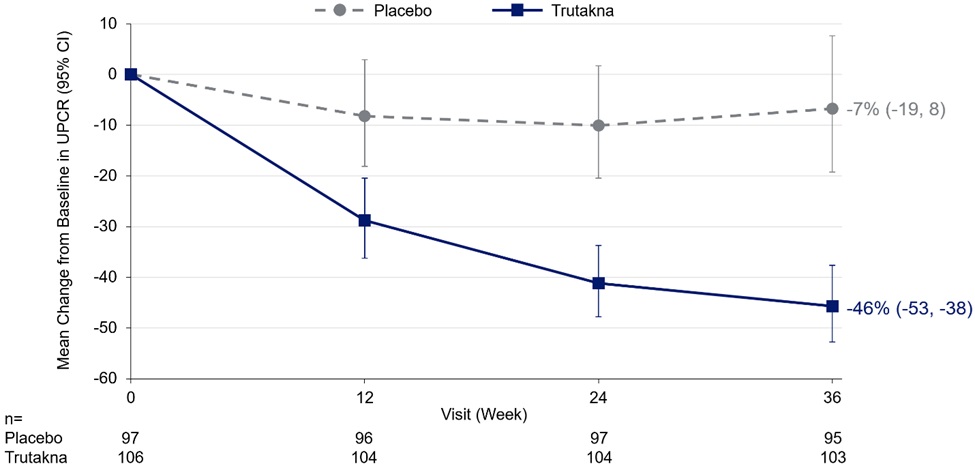
Adjusted percent change relative to baseline in UPCR (sampled from a 24-hour urine collection) with 95% CI reported in the figure were estimated based on the MMRM analysis in Table 1 .
“n” represents the number of subjects with observed data for each visit and treatment group.
Abbreviations: CI, confidence interval; MMRM, mixed model repeated measures; UPCR, urine protein-to-creatinine ratio.
The treatment effect on UPCR at Week 36 was generally consistent across subgroups including age, sex, race, and baseline disease characteristics (such as baseline eGFR and proteinuria levels). The treatment effect on UPCR at Week 36 was also similar in patients regardless of concomitant use with an SGLT2i.
HOW SUPPLIED/STORAGE AND HANDLING
How Supplied
TRUTAKNA (atacicept-vymj) injection is a sterile, preservative-free, clear to slightly opalescent, brownish-yellow solution, free of visible particles for subcutaneous administration supplied as a single-dose autoinjector. The autoinjector is not made with natural rubber latex.
TRUTAKNA is supplied as follows:
Pre-filled autoinjector:
Carton contains four 150 mg/mL single-dose autoinjectors: NDC 85052-101-04
Storage and Handling
Store refrigerated at 2°C to 8°C (36°F to 46°F) in the original carton to protect from light.
If needed, TRUTAKNA autoinjector may be stored at room temperature up to 25°C (77°F), for a single period of 3 days (72 hours). Once TRUTAKNA has been stored at room temperature, it should not be placed back into the refrigerator. Discard the autoinjector if not used within this 72‑hour period. Do not freeze. Do not shake. Do not expose to heat.
| These Instructions for Use have been approved by the U.S. Food and Drug Administration. LBL-0038, V1.0 | Approved: 07/2026 |
INSTRUCTIONS FOR USE TRUTAKNA ™ (tru-TAK-nuh) (atacicept-vymj) injection, for subcutaneous use 150 mg/mL Single-dose Pre-filled Autoinjector |
|
This Instructions for Use contains information on how to inject TRUTAKNA. Read this Instructions for Use before you use the TRUTAKNA autoinjector and each time you get a refill. There may be new information. | |
| |
Supplies Needed | |
|
|
| |
Storing TRUTAKNA | |
Keep the TRUTAKNA autoinjector and all medicines out of the reach of children. | |
Getting Started | |
1. Bring the TRUTAKNA autoinjector to room temperature | |
Remove one TRUTAKNA autoinjector from the refrigerator and allow it to sit for 15 to 30 minutes at room temperature between 60°F to 77°F (15°C to 25°C) before injecting. Allowing the TRUTAKNA autoinjector to warm may make the injection more comfortable. Do not microwave or heat up the TRUTAKNA autoinjector. | |
2. Check the TRUTAKNA autoinjector | |
| |
| |
Do not use the TRUTAKNA autoinjector if:
| |
Selecting the Injection Site | |
3. Choose the injection site | |
| |
| |
Choose a different injection site each time you inject TRUTAKNA. Rotating injection sites may help prevent injection site irritation or scarring. | |
Do not inject into:
| |
Preparing to Inject TRUTAKNA | |
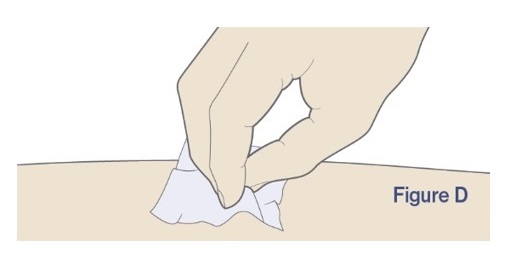
4. Clean the chosen injection site with an alcohol wipe | |
| |
| |
Do not fan or blow on the cleaned area. Do not touch the injection site again after cleaning it. | |
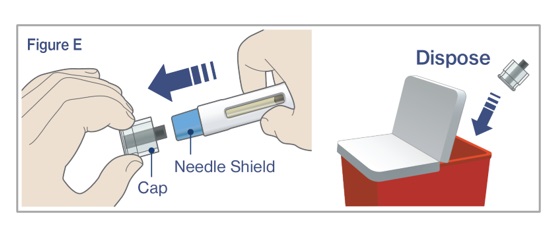
5. Remove the cap | |
| |
| |
Do not:
| |
Injecting TRUTAKNA | |
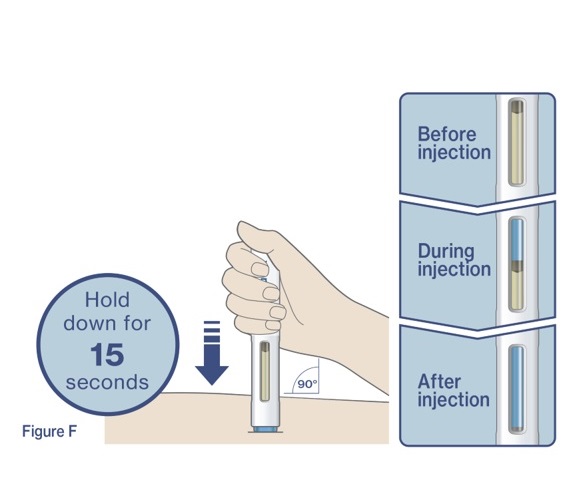
6. Place the TRUTAKNA autoinjector and begin the injection | |
|
|
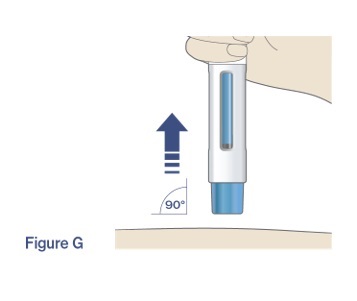
7. Remove | |
|
|
Do not:
| |
After Injecting TRUTAKNA | |
8. Check injection site | |
| |
9. Throwing away (disposal) | |
Important: Do not re-cap the autoinjector before throwing it away (disposing). | |
Keep the TRUTAKNA autoinjector and the disposal container out of the reach of children. | |
©2026 Vera Therapeutics, Inc. Manufactured by: Vera Therapeutics, Inc. Brisbane, CA 94005 US License No.: 2386 1-833-633-8372 | |
Mechanism of Action
Atacicept-vymj, a BLyS-specific inhibitor and APRIL blocker, is a TACI-Fc fusion glycoprotein that binds B cell activating factor (BAFF) and APRIL with dissociation constants (Kd) of 106 pM and 33 pM, respectively, and reduces BAFF- and APRIL-mediated signaling. BAFF is also known as BlyS.
Reduction in BAFF- and APRIL-mediated signaling decreases production of serum galactose deficient IgA1 (Gd-IgA1), which is implicated in the pathophysiology of IgAN.
