Get your patient on Wilate - Von Willebrand Factor/Coagulation Factor Viii Complex (Human) (Von Willebrand Factor/Coagulation Factor Viii Complex (Human))
Wilate - Von Willebrand Factor/Coagulation Factor Viii Complex (Human) prescribing information

INDICATIONS AND USAGE
WILATE is indicated in adult and pediatric patients with von Willebrand disease (VWD) for:
- On-demand treatment and control of bleeding episodes
- Perioperative management of bleeding
- Routine prophylaxis to reduce the frequency of bleeding episodes
WILATE is indicated in adult and pediatric patients 12 years of age and older with hemophilia A for:
On-demand treatment and control of bleeding episodes
Routine prophylaxis to reduce the frequency of bleeding episodes
DOSAGE AND ADMINISTRATION
For Intravenous Use after Reconstitution
Dose
Each vial of WILATE contains the labeled amount in International Units (IU) of von Willebrand factor (VWF) activity as measured with the Ristocetin cofactor assay (VWF:RCo), and coagulation factor VIII (FVIII) activity measured with the chromogenic substrate assay.
The number of units of VWF:RCo and FVIII activities administered is expressed in IU, which is related to the current WHO standards for VWF and FVIII products. VWF:RCo and FVIII activities in plasma are expressed either as a percentage (relative to normal human plasma) or in IU (relative to the International Standards for VWF:RCo and FVIII activities in plasma). One IU of VWF:RCo activity is equivalent to the quantity of VWF:RCo in one mL of normal human plasma. One IU of FVIII activity is defined by the quantity of Factor VIII in one mL of normal human pooled plasma. The ratio between VWF:RCo and FVIII activities in WILATE is approximately 1:1.
VWD
Calculate the required dosage of VWF:RCo, based on the empirical finding that 1 IU VWF:RCo per kg body weight raises the plasma VWF activity by approximately 2% of normal activity or 2 IU/dL, using the following formula:

Adjust the dosage and frequency of administration according to the clinical effectiveness in the individual patient.
Dosing for Bleeding Episodes
Table 1 Dosing for Treatment of Minor and Major Bleeding Episodes in all VWD types
| Type of Bleeding Episodes | VWF:RCo and FVIII Activity Trough Levels (% of normal) | Loading Dosage (IU VWF:RCo/kg body weight) | Maintenance Dosage (IU VWF:RCo/kg body weight) | Frequency of Doses (hours) | Duration of Therapy (days) |
Minor (≥ 6 years) | >30 | 20-40 | 20-30 | 12-24 | Up to 3 days |
Major (≥ 6 years) | >50 | 40-60 | 20-40 | 12-24 | Up to 5-7 days |
Minor (<6 years) | >30 | 30-50 | 30-40 | 12-24 | Up to 3 days |
Major (<6 years) | >50 | 50-80 | 30-50 | 12-24 | Up to 5-7 days |
Adjust the dose and duration according to the extent and location of bleeding and the patient’s clinical condition. In VWD type 3 patients, those with gastro-intestinal (GI) bleedings may require higher doses.
Repeat doses as needed based upon repeat monitoring of appropriate clinical and laboratory measures.
Perform appropriate laboratory tests on the patient’s plasma at suitable intervals to assure that adequate VWF:RCo and FVIII activity levels have been reached and are maintained.
Dosing for Surgeries
Table 2 Dosing for Treatment in Minor and Major Surgeries in all VWD Types
| Type of Surgery | Loading Dosage (IU VWF:RCo/kg body weight) (within 3 hours before surgery) | VWF:RCo Peak Levels (% of normal) | Maintenance Dosage (IU VWF:RCo/kg body weight) | VWF:RCo Trough Levels (% of normal) | Frequency of Doses (hours) | Duration of Therapy (days) |
Minor | 30-60 | 50 | 15-30 or half the loading dose | >30 | 12-24 | Until wound healing achieved, up to 3 days |
| Major | 40-60 | 100 | 20-40 or half the loading dose | >50 | 12-24 (at least 2 doses within first 24 hours after the start of surgery) | Until wound healing achieved, up to 6 days or more |
Adjust dosage depending on the severity of VWD, and on the patient’s bleeding tendency, clinical condition or pharmacokinetic data.
In order to decrease the risk of perioperative thrombosis, FVIII activity levels should not exceed 250%.
Whereas Table 2 provides a dosing range that is expected to provide the desired peak levels of VWF:RCo, the following is an example on how to calculate the loading dose based on a patient’s individual IVR which is to be determined pre-surgery.
Prior to surgery, measure incremental in vivo recovery (IVR) and assess baseline plasma VWF:RCo activity. The IVR for VWF:RCo provides the IU/dL rise per IU/kg body weight infused and can be measured and calculated as follows:
- Measure plasma VWF:RCo at baseline
- Infuse 60 IU VWF:RCo/kg of WILATE intravenously at time 0
Measure plasma VWF:RCo at 30 minutes after the infusion
IVR = (Plasma VWF:RCo 30 min – Plasma VWF:RCo baseline )/60IU kg
Calculation of the loading dose requires four values: the target peak plasma VWF:RCo level, the baseline VWF:RCo level, body weight (BW) in kilograms, and IVR. If the actual IVR calculation exceeds 2.5, use 2.5 to calculate the recommended loading dosing to avoid under-dosing. If IVR is not available, a standardized dose can be calculated based on an assumed VWF:RCo IVR of 2.0 U/dL per IU/kg of WILATE administered.
Example: Assumption: Baseline VWF:RCo value = 10 IU/dL, and VWF:RCo target level = 100 IU/dL = Δ 90 IU/dL Assumption: Patient’s weight = 75 kg, patient’s IVR = 1.8 (IU/dL)/(IU/kg)

When possible post surgery, perform appropriate laboratory tests on the patient’s plasma once a day after surgery to assure that adequate VWF:RCo and FVIII activity levels have been reached and are maintained.
Dosing for routine prophylactic treatment
Exact dosing should be defined by the severity of VWD and by the patient’s clinical status, response or pharmacokinetic data.
Table 3 Dosing for Routine Prophylaxis
| Patients | Dose (IU/kg) | Frequency of infusions |
| Age 6 and older | 20 – 40 IU/kg | Two or three times per week |
| Age <6 | 30 – 50 IU/kg | Two or three times per week |
Hemophilia A
- Calculation of the required dose of Factor VIII is based on the empirical finding that 1 IU Factor VIII per kg body weight raises the plasma Factor VIII activity by approximately 2% of normal activity or 2 IU/dL when assessed using the one stage clotting assay. Use the following formula to determine the required dose:

Dose and duration of therapy depend on the patient’s weight, type and severity of bleeding episode, FVIII level, and presence of inhibitors.
Titrate dose and frequency to the patient’s clinical response, individual needs, severity of deficiency, severity of bleeding episode, desired FVIII level, and presence of inhibitor, and the patient’s clinical condition. Patients may vary in their pharmacokinetic (e.g., half-life, in vivo recovery) and clinical responses to WILATE.
Table 4 Dosing for Treatment of Bleeding Episodes
| Type of Bleeding Episodes• | Recommended dosage (IU/kg body weight) | Frequency of Doses (hours) | Duration of Therapy (days) |
| Minor | 30-40 | 12-24 | At least 1 day, until the bleeding episode has resolved |
| Moderate | 30-40 | 12-24 | 3 to 4 days or more, until the bleeding episode has resolved |
| Major | 35-50 | 12-24 | 3 to 4 days or more, until the bleeding episode has resolved |
| Life-threatening | 35-50 | 8-24 | Until threat has resolved |
•Minor bleeding episodes may include e.g. early onset muscle and joint bleeds with no visible symptoms, such as little or no change in the range of motion of affected joint, mild restriction of mobility and activity, scrapes, superficial cuts, bruises, superficial mouth bleeds, and most nose bleeds; moderate bleeding episodes may include e.g. advanced soft tissue and muscle bleeds into the limbs, bleeding into the joint space, such as the elbow, knee, ankle, wrist, shoulder, hip, foot, or finger; major bleeding episodes may include e.g. complicated joint bleeds, bleeds of the pelvic muscles, eyes, and life-threatening bleeding episodes may include e.g. bleedings in the abdomen, digestive system or chest, central nervous system bleeds, bleedings in the area of the neck or throat or pharynx, or other major trauma.
Routine Prophylaxis
Exact dosing should be defined by the patient’s clinical status and response.
Table 5 Dosing for Routine Prophylaxis
| Patients | Recommended Dosage (IU/kg body weight) | Frequency of Infusions |
| Adolescents and adults | 20-40 IU/kg | Every 2 to 3 days |
Monitoring parameters
- Monitor plasma FVIII levels periodically to evaluate individual patient response to the dosage regimen.
- If dosing studies have determined that a particular patient exhibits a lower/higher than expected response and shorter/longer half-life, adjust the dose and the frequency of dosing accordingly
Failure to achieve the expected FVIII:C level or to control bleeding after an appropriately calculated dosage may be indicative of the development of an inhibitor (an antibody to FVIII:C). Quantitate the inhibitor level by appropriate laboratory procedures and document its presence. Treatment with WILATE in such cases must be individualized.
Preparation and Reconstitution
- WILATE is provided with a Nextaro ® transfer device for reconstitution of the freeze-dried powder in diluent, a 10 mL syringe, an infusion set and two alcohol swabs.
- Reconstitute the powder only directly before injection. Because WILATE contains no preservatives, use the solution within 4 hours after reconstitution.
Instructions for Reconstitution:
 | 1) Warm the powder (WILATE) and Diluent in the closed vials up to room temperature. If a water bath is used for warming, avoid water contact with the rubber stoppers or the caps of the vials. The temperature of the water bath should not exceed +37°C (98°F). 2) Remove the caps from the powder (WILATE) vial and the diluent vial and clean the rubber stoppers with an alcohol swab. |
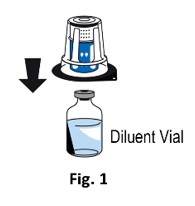
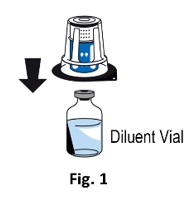
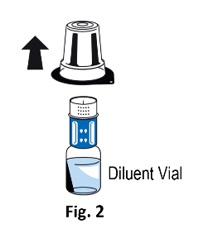 | 3). Open the transfer device package by peeling off the lid. To maintain sterility, leave the Nextaro ® device in the clear outer packaging. The transfer device must be attached to the diluent vial first and then to the lyophilized powder vial. Otherwise, loss of vacuum occurs, and transfer of the diluent does not take place. If diluent is not completely transferred to the lyophilized powder vial during this process, contact Octapharma’s customer service. Place the diluent vial on a level surface and hold the vial firmly.. Ensure the Nextaro ® device remains in the outer packaging and invert the Nextaro ® device ensuring the blue part with the water droplets is on top of the diluent vial. Push the Nextaro ® straight and firmly down until it snaps into place (Fig. 1). Do not twist while attaching. While holding onto the diluent vial, remove the outer package from the Nextaro ® , leaving the Nextaro ® attached firmly to the diluent vial (Fig. 2). |
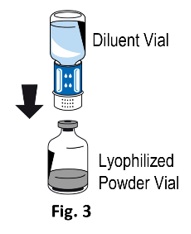 | 4) With the powder (WILATE) vial held firmly on a level surface, quickly invert the diluent vial with the Nextaro ® attached. Place the white part of the Nextaro ® on top of the powder (WILATE) vial until it snaps into the place (Fig. 3). Do not twist while attaching. The diluent will be drawn into the powder (WILATE) vial by the vacuum. 5) With both vials still attached, immediately start swirling the powder (WILATE) vial to ensure the powder is fully saturated. A slight whirlpool is formed by swirling. In order to avoid foaming, please do not shake the vial |
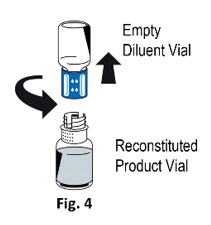 | 6) After 30 seconds, firmly hold both the white and blue parts of the Nextaro ® . Unscrew the Nextaro ® into two separate pieces (Fig. 4) and discard the empty diluent vial and the blue part of the Nextaro ® . Continue swirling until the powder in the WILATE vial has completely dissolved. This process may take several minutes. The final solution is clear or slightly opalescent, colorless or slightly yellow. If the powder fails to dissolve completely or an aggregate is formed, do not use the preparation. |
Administration
For intravenous injection after reconstitution only
Inspect final solution visually for particulate matter and discoloration prior to administration, whenever solution and container permit.
Do not mix WILATE with other medicinal products or administer simultaneously with other intravenous preparation in the same infusion set.
With the WILATE vial still upright, attach a plastic disposable syringe to the Nextaro ® (white plastic part). Invert the system and draw the reconstituted WILATE into the syringe.
Once WILATE has been transferred into the syringe, firmly hold the barrel of the syringe (keeping the syringe plunger facing down) and detach the Nextaro ® from the syringe. Discard the Nextaro ® (white plastic part) and empty WILATE vial.
Clean the intended injection site with an alcohol swab.
Attach a suitable infusion needle to the syringe.
Measure the patient’s pulse rate before and during the injection. If a marked increase in the pulse rate occurs, reduce the injection speed or interrupt the administration.
Inject the solution intravenously at a slow speed of 2-4 mL/minute.
Dispose unused product or waste material in accordance with local requirements.
DOSAGE FORMS AND STRENGTHS
WILATE is available as a sterile, lyophilized powder for reconstitution for intravenous injection, provided in the following nominal strengths per single-dose vial:
- 500 IU VWF:RCo and 500 IU FVIII activities in 5 mL
- 1000 IU VWF:RCo and 1000 IU FVIII activities in 10 mL
USE IN SPECIFIC POPULATIONS
Pregnancy
Risk Summary
There are no data with WILATE use in pregnant women to inform a drug-associated risk. Animal reproduction studies have not been conducted with WILATE. WILATE was given to four patients (3 type 3 and 1 type 2B) during labor and delivery in one clinical study. Two patients underwent vaginal delivery (type 3) and two patients had a cesarean section (type 3/type 2B). In this study all procedures were uneventful.
In the U.S. general population, regardless of drug exposure, the estimated background risk of major birth defect and miscarriage in clinically recognized pregnancies is 2-4% and 15-20%, respectively.
Lactation
Risk summary
There is no information regarding the presence of WILATE in human milk, the effect on the breastfed infant, and the effects on milk production. The developmental and health benefits of breastfeeding should be considered along with the mother’s clinical need for WILATE and any potential adverse effects on the breastfed infant from WILATE or from the underlying maternal condition.
Pediatric Use
Von Willebrand Disease The safety and effectiveness of WILATE have been established for pediatric patients with VWD for the treatment and control of bleeding episodes (BEs), perioperative management and routine prophylaxis. The use of WILATE in pediatric patients with VWD was supported by 10 adequate and well-controlled clinical studies which enrolled 66 pediatric patients aged 0 to 16 years [see Adverse Reactions (6 ) and Clinical Studies (14 )] .
Treatment and control of bleeding episodes and perioperative management: Eleven patients with VWD between 5 to 16 years were treated with treatment success achieved in 88% of BEs [see Clinical Studies (14 )] . Thirteen patients had successful perioperative hemostasis. In children between 1 and 5, there was 100% treatment success of BEs and one surgery. [see Clinical Studies (14 )]
For routine prophylaxis, total annualized bleeding rate (TABR) was 4.6 in patients < 6 years, 3.73 in patients 6 to 12 years, and 4.28 in patients 12 to < 17 years.
Hemophilia A
The safety and effectiveness of WILATE have been established for pediatric patients ≥12 years with hemophilia A for the treatment and control of bleeding episodes and routine prophylaxis use. The use of WILATE was supported by evidence from 7 adequate and well-controlled clinical studies which enrolled 67 pediatric patients. One clinical study evaluated routine prophylaxis in 5 pediatric patients.The annualized bleeding rate was mean 0.4. [see Clinical Studies (14 )].
The safety and effectiveness of WILATE have not been established for pediatric patients <12 years with hemophilia A.
Geriatric Use
There were 10 patients (5%) 65 years of age and older in clinical studies in VWD and 1 patient (1%) 65 years of age and older in clinical studies in hemophilia A. The number of patients was inadequate to allow subgroup analysis to support recommendations in the geriatric population.
CONTRAINDICATIONS
WILATE is contraindicated in patients with known hypersensitivity reactions, including anaphylactic or severe systemic reactions, to human plasma-derived products, any ingredient in the formulation [see Description (11 )] , or components of the container.
WARNINGS AND PRECAUTIONS
Hypersensitivity Reactions
Hypersensitivity reactions may occur with WILATE. Signs and symptoms include angioedema, burning and stinging at the infusion site, chills, flushing, generalized urticaria, headache, hives, hypotension, lethargy, nausea, restlessness, tachycardia, tightness of the chest, tingling, vomiting, and wheezing that may progress to severe anaphylaxis (including shock) with or without fever. Closely monitor patients receiving WILATE and observe for any symptoms throughout the infusion period.
Because inhibitor antibodies may occur concomitantly with anaphylactic reactions, evaluate patients experiencing an anaphylactic reaction for the presence of inhibitors. [see Warnings and Precautions (5.3 )]
Thromboembolic Events
In VWD, continued treatment using a FVIII-containing VWF product may cause an excessive rise in FVIII activity, which may increase the risk of thromboembolic events. Monitor plasma levels of VWF:RCo and FVIII activities in patients receiving WILATE to avoid sustained excessive VWF and FVIII activity levels.
Neutralizing Antibodies
VWD
Neutralizing antibodies (inhibitors) to VWF and Factor VIII have occurred following administration of WILATE [see Immunogenicity (12.6 )] . Monitor all patients for VWF and Factor VIII inhibitor development using appropriate clinical observations and laboratory tests. If the patient's plasma VWF and Factor VIII levels do not increase as expected, or if bleeding remains uncontrolled after WILATE administration, suspect the presence of an inhibitor (neutralizing antibodies) and perform appropriate testing. In patients with antibodies against VWF, VWF is not effective and WILATE administration may lead to severe adverse reactions. Consider other therapeutic options for such patients.
Hemophilia A
Monitor plasma Factor VIII activity by performing a validated test (e.g., one stage clotting assay), to confirm that adequate Factor VIII levels have been achieved and maintained [see Dosage and Administration (2.1 )] .
- Monitor for the development of Factor VIII inhibitors. Perform a Bethesda inhibitor assay if expected Factor VIII plasma levels are not attained, or if bleeding is not controlled with the expected dose of WILATE. Use Bethesda Units (BU) to report inhibitor levels.
Transmissible Infectious Agents
WILATE is made from human plasma. Because this product is made from human blood, it may carry a risk of transmitting infectious agents, e.g., viruses, and theoretically, the variant Creutzfeldt-Jakob disease (vCJD) agent. There is also the possibility that unknown infectious agents may be present in the product. The risk that WILATE will transmit viruses has been reduced by screening plasma donors for prior exposure to certain viruses, by testing for the presence of certain current virus infections, and by inactivating and removing certain viruses during manufacture. Despite these measures, it may still potentially transmit disease.
Record the batch number of the product every time WILATE is administered to a patient, and consider appropriate vaccination (against hepatitis A and B virus) of patients in regular/repeated receipt of WILATE. ALL infections thought by a physician possibly to have been transmitted by this product should be reported by the physician or other healthcare provider to Octapharma USA, Inc., at 1-866-766-4860.
Monitoring and Laboratory Tests
- Monitor plasma levels of VWF:RCo and FVIII activities in patients receiving WILATE to avoid sustained excessive VWF and FVIII activity levels, which may increase the risk of thromboembolism, particularly in patients with known clinical or laboratory risk factors.
Monitor for development of VWF and FVIII inhibitors. Perform assays to determine whether VWF and/or FVIII inhibitor(s) is present if bleeding is not controlled with the expected dose of WILATE.
ADVERSE REACTIONS
Clinical Trials Experience
Because clinical trials are conducted under widely varying conditions, adverse reaction rates observed in the clinical trials of WILATE cannot be directly compared to rates in clinical trials of another drug and may not reflect the rates observed in clinical practice.
A total of 208 patients treated for VWD (28 patients aged <6 years, 16 patients aged 6 to <12 years, 22 patients aged 12 to <17 years and 142 adult patients) received 12144 WILATE infusions, including clinical studies that involved prophylactic use, treatment on demand, surgery, and pharmacokinetics. Of the 208 patients, 37 (17.8%) had VWD type 1, 51 (24.5%) had VWD type 2, and 110 (52.9%) had VWD type 3, and 10 (4.8%) had an unknown status; 115 (55.3%) patients were female and 93 (44.7%) patients were male. Overall, patients received 20,163,140 IU of WILATE during 11661 exposure days. The most common adverse drug reactions were hypersensitivity reactions (4 patients; 2%), dizziness (3 patients; 1.5%), urticaria and chest discomfort (each with 2 patients; 1%).
A total of 136 hemophilia A previously treated patients (aged 11 to 66 years) received WILATE in 5 clinical studies that involved prophylactic use, treatment on demand, surgery and/or pharmacokinetics. All patients were male. Overall, patients received 19,317,004 IU of WILATE during 9001 exposure days. The most common adverse reaction was pyrexia (2 patients; 1.5%). Other adverse reactions included pruritus, headache and sleeping disorder (1 subject; 0.75%). Two out of 55 patients (3.6%) in the pivotal study of routine prophylaxis in severe hemophilia A had unexplained transient worsening of pre-existing thrombocytosis while on the study.
Postmarketing Experience
Because these reactions are reported voluntarily from a population of uncertain size, it is not always possible to reliably estimate their frequency or establish a causal relationship to product exposure.
The following adverse reactions have been identified during postmarketing use of WILATE:.
Respiratory, thoracic, and mediastinal disorders: Dyspnea and cough
Vasculardisorders: Hypertension
Cardiac Disorders: Chest discomfort
Gastrointestinal disorders: Abdominal pain
Musculoskeletal and connective tissue disorders: Back pain
Blood and Lymphatic System Disorders: Factor VIII inhibition and Von Willebrand factor inhibition
Immune System Disorders: Hypersensitivity reactions and anaphylactic reactions
DESCRIPTION
WILATE is a human plasma-derived, sterile, purified, double virus inactivated von Willebrand Factor/Coagulation Factor VIII Complex. WILATE is supplied as a lyophilized powder for reconstitution for intravenous injection. The diluent for reconstitution of the lyophilized powder is Water for Injection with 0.1% Polysorbate 80.
WILATE contains no preservative. No albumin is added as a stabilizer. WILATE is labeled with the actual VWF:RCo and FVIII activities in IU per vial. The VWF activity (VWF:RCo) is determined using a manual agglutination method referenced to the current “WHO International Standard for von Willebrand Factor Concentrate”. The FVIII activity is determined using a chromogenic substrate assay referenced to the current “WHO International Standard for Human Coagulation Factor VIII Concentrate”. The assay methodologies are according to European Pharmacopoeia (Ph.Eur.). The resulting specific activity of WILATE is ≥ 60 IU VWF:RCo and ≥ 60 IU FVIII activities per mg of total protein.
The nominal composition of WILATE is as follows:
| Component | Quantity/ 5 mL vial | Quantity/ 10 mL vial |
| VWF:Rco | 500 IU | 1000 IU |
| FVIII | 500 IU | 1000 IU |
| Total protein | ≤ 7.5 mg | ≤ 15.0 mg |
| Glycine | 50 mg | 100 mg |
| Sucrose | 50 mg | 100 mg |
| Sodium chloride | 117 mg | 234 mg |
| Sodium citrate | 14.7 mg | 29.4 mg |
| Calcium chloride | 0.8 mg | 1.5 mg |
| Water for injection | 5 mL | 10 mL |
| Polysorbate 80 | 1 mg/mL | 1 mg/mL |
Von Willebrand Factor/Coagulation Factor VIII complex is the active ingredient in WILATE. It is derived from large pools of human plasma collected in U.S. plasma donation centers. All plasma donations are tested for viral markers in compliance with requirements of EU CPMP and FDA guidance. In addition, the limit for the titer of human parvovirus B19 DNA in the manufacturing pool is set not to exceed 10 4 IU/mL.
The product is manufactured from cryoprecipitate, which is reconstituted in a buffer and treated with aluminum hydroxide followed by two different chromatography steps, ultra- and diafiltration, and sterile filtration. The manufacturing process includes two virus inactivation steps, namely, treatment with an organic solvent/detergent (S/D) mixture, composed of tri-n-butyl phosphate (TNBP) and Octoxynol-9, and a terminal dry heat (TDH) treatment of the lyophilized product in final container [at +100°C (212°F) for 120 minutes at a specified residual moisture level of 0.7-1.6%]. In addition, the ion-exchange chromatography step utilized during WILATE manufacturing also removes some viruses.
Table 6 Virus Reduction During WILATE Manufacturing
| Production Step | Virus Reduction Factor [log 10 ] | ||||||
| Enveloped Viruses | Non-Enveloped Viruses | ||||||
| HIV-1 | SBV | BVDV | PRV | REO 3 | HAV | PPV | |
| S/D Treatment | > 7.52 | > 8.63 | > 4.18 | > 8.54 | na | na | na |
| Ion-Exchange Chromatography | nd | nd | nd | nd | 1.86 – 2.33 | 1.16 – 1.93 | 3.29 |
| TDH Treatment | 4.91 - > 5.79 | > 5.51 | nd | 3.99 – 4.87 | > 6.40 | > 5.69 | 2.57 – 4.12 |
| Global Reduction Factor | > 12.43 – > 13.31 | > 14.14 | > 4.18 | > 12.53 - > 13.41 | > 8.26 - > 8.73 | > 6.85 - > 7.62 | 5.86 – 7.41 |
na: not applicable
nd: not done (S/D reagents present)
HIV-1: Human Immunodeficiency Virus - 1
SBV: Sindbis Virus
BVDV: Bovine Viral Diarrhea Virus
PRV: Pseudorabies Virus
REO 3: Reovirus Type 3
HAV: Hepatitis A Virus
PPV: Porcine Parvovirus
CLINICAL PHARMACOLOGY
Mechanism of Action
WILATE contains von Willebrand factor (VWF) and coagulation factor VIII (FVIII), constituents of normal plasma. VWF promotes platelet aggregation and platelet adhesion on damaged vascular endothelium; it also serves as a stabilizing carrier protein for the procoagulant protein FVIII, an essential cofactor in activation of factor X leading to formation of thrombin and fibrin. Patients suffering from VWD have a deficiency or abnormality of VWF. This reduction in VWF plasma concentration results in correspondingly low FVIII activity and abnormal platelet function, thereby resulting in excessive bleeding. After administration, WILATE temporarily replaces missing VWF and FVIII that are needed for effective hemostasis. When infused into a patient with hemophilia A, FVIII binds to VWF in the patient´s circulation. Activated FVIII (FVIIIa) acts as a cofactor for activated factor IX (FIXa), accelerating the conversion of factor X to activated factor X (FXa). FXa converts prothrombin into thrombin. Thrombin then converts fibrinogen into fibrin and a clot can be formed. Hemophilia A is a sex-linked hereditary disorder of blood coagulation due to decreased levels of FVIII:C and results in profuse bleeding into joints, muscles or internal organs, either spontaneously or as a result of accidental or surgical trauma. By replacement therapy the plasma levels of FVIII are increased, thereby enabling a temporary correction of the factor deficiency and correction of the bleeding tendencies.
Pharmacodynamics
There have been no specific pharmacodynamic studies on WILATE.
Pharmacokinetics
VWD
Pharmacokinetic (PK) profiles of WILATE were determined by FVIII activity, VWF:RCo, VWF:Ag, and VWF:CB obtained from an open label, prospective, randomized, controlled, two-arm cross-over study with WILATE and a comparator product conducted at 6 sites in the US. Twenty-two patients (≥ 12 years of age) with inherited VWD [type 1, n=6; type 2, n=9 (6 type 2A, 1 type 2B, and 2 type 2M); and type 3, n=7] received an intravenous bolus dose of WILATE containing approximately 40 IU of VWF:RCo/kg body weight. Twenty patients completed the study as per protocol. PK parameters for VWF:RCo and FVIII activities are summarized in Table 7 and Table 8 , respectively. The PK parameters reported in Table 7 , Table 9 and Table 10 are based on VWF:RCo values obtained using a modified Behring Coagulation System (BCS) analytical method. The modified BCS was used because of its validated lower variability compared with the standard BCS. Measured concentrations (IU VWF:RCo/mL) are higher by the modified BCS than by the standard BCS analytical method which is used in some clinical laboratories. Dose adjusted C max and AUC determined by this modified BCS method are approximately 1.5 times higher than those by the standard BCS method. No difference has been found in incremental recovery.
The PK parameters reported in Table 7-14 are based on values obtained from two open label, prospective, non-controlled, international, multi-center studies in which pediatric patients aged 6-16 years and <6 years with inherited VWD underwent pharmacokinetic investigations before the start of prophylaxis treatment. In the study that included patients aged 6-16 years, thirteen patients [type 1, n=3; type 2, n=3, and type 3, n=7]) received an intravenous bolus dose of WILATE containing approximately 60 IU of VWF:RCo/kg body weight. Eight patients were 6-11 years old and 5 patients 12-16 years. In the study that included children <6 years of age, 10 patients (type 2, n=4, and type 3, n=6) underwent PK and received an intravenous bolus dose of WILATE containing approximately 80 IU of VWF:RCo/kg body weight.
Table 7 Pharmacokinetic Parameters of VWF:RCo: mean ± SD (range)
| Parameters | VWD type I (n = 5) | VWD type II (n = 9) | VWD type III (n = 6) | Total (n = 20) |
| C max (IU/dL) | 74 ± 13 (62 - 91) | 77 ± 18 (40 - 100) | 79 ± 13 (65 - 102) | 76 ± 15 (40 - 102) |
AUC (0-inf) (IU•hr/dL) | 1633 ± 979 (984 - 3363) | 1172 ± 421 (571 - 1897) | 995 ± 292 (527 - 1306) | 1235 ± 637 (527 - 3363) |
| Half-life (hrs) | 24.7 ± 17.9 (11.2 - 48.5 ) | 15.3 ± 6.3 (6.0 - 26.4) | 9.1± 2.6 (5.7 - 12.9 ) | 15.8 ± 11.0 (5.7 - 48.5) |
| CL (mL/h/kg) | 3.1 ± 1.1 (1.2 - 4.1) | 4.1 ± 1.7 (2.0 - 7.1) | 4.2 ± 1.4 (3.0 - 6.6) | 3.9 ± 1.5 (1.2 - 7.1) |
| Vd (mL/kg) | 81.7 ± 38.5 (15.3 - 74.2) | 76.6 ± 35.4 (45.3 - 158.8) | 49.4 ± 16.7 (29.7 - 67.1) | 69.7 ± 33.2 (29.7 - 158.8) |
| MRT (hrs) | 32.7 ± 25.8 (15.3 - 74.2) | 19.7 ± 5.6 (9.9 - 27.1) | 11.9 ± 2.9 (9.2 - 15.9) | 20.6 ± 14.8 (9.2 - 74.2) |
Recovery (%IU/kg) | 1.8 ± 0.2 (1.5 - 2.0) | 1.8 ± 0.5 (1.0 - 2.4) | 2.1 ± 0.3 (1.8 - 2.6) | 1.9 ± 0.4 (1.0 - 2.6) |
C max = peak concentration; AUC = area under curve; CL = clearance; Vd = volume of distribution at steady state; MRT = mean residence time
Table 8 Pharmacokinetic Parameters of FVIII activity (chromogenic assay): mean ± SD (range)
| Parameters | VWD type I (n = 5) | VWD type II (n = 8•) | VWD type III (n = 6) | Total (n = 19•) |
| C max (IU/dL) | 117.1 ± 12.1 (103 - 135) | 147.2 ± 32.6 (102 - 206) | 120 ± 23 (91 - 148) | 112 ± 23 (59 - 148) |
AUC (0-inf) (IU•hr/dL) | 1187 ± 382 (523 - 1483) | 1778 ± 1430 (544 - 4821) | 2670 ± 854 (1874 - 3655) | 2290 ± 1045 (464 - 4424) |
| Half-life (hrs) | 17.5 ± 4.9 (10.9 - 23.8) | 23.6 ± 8.3 (12.6 - 34.7) | 16.1 ± 3.1 (11.8 - 20.1) | 19.6 ± 6.9 (10.9 - 34.7) |
| CL (mL/h/kg) | 4.4 ± 3.7 (2.5 - 11.0) | 2.5 ± 0.9 (1.2 - 3.5) | 2.0 ± 0.6 (1.4 - 2.8) | 2.9 ± 2.1 (1.2 - 11.0) |
| Vd (mL/kg) | 95.0 ± 53.8 (57.1 - 190.0) | 79.5 ± 23.1 (52.8 - 116.2) | 44.2 ± 10.4 (31.8 - 57.1) | 72.4 ± 36.2 (31.8 - 190.0) |
| MRT (hrs) | 24.1 ± 5.5 (17.2 - 31.5) | 35.1 ± 14.2 (17.5 - 61.6) | 23.0 ± 3.7 (18.0 - 27.7) | 28.4 ± 11.1 (17.2 - 61.6) |
Recovery (%IU/kg) | 1.9 ± 0.5 (1.1 - 2.5) | 2.2 ± 0.4 (1.6 - 2.8) | 2.5 ± 0.5 (2.0 - 3.0) | 2.2 ± 0.5 (1.1 - 3.0) |
•One patient with implausible long half-life is not included in the summary table, except for recovery result. C max = peak concentration; AUC = area under curve; CL = clearance; Vd = volume of distribution at steady state; MRT = mean residence time
Table 9 Pharmacokinetic Parameters of VWF:RCo in children 6-16 years per VWD type: mean ± SD (range)
| Parameters | VWD type I (n = 3) | VWD type II (n = 3) | VWD type III (n = 7) | Total (n = 13) |
| C max (IU/dL) | 91.3 ± 1.3 (78.5 – 119.3) | 63.5 ± 1.5 (39.0 – 84.4) | 77.4 ± 1.1 (59.1 – 90.6) | 76.8 ± 1.3 (39.0 – 119.3) |
AUC (0-inf) (IU•hr/dL) | 963 ± 1.0 (920 – 1003) | 1421 ± 2.2 (634 – 3084) | 822 ± 1.2 (657 – 1189) | 968 ± 1.5 (634 – 3084) |
| Half-life (hrs) | 6.9 ± 1.1 (6.5 – 7.4) | 17.4 ± 2.0 (8.6 – 32.5) | 6.5 ± 1.2 (4.9 – 8.5) | 8.3 ± 1.7 (4.9 – 32.5) |
| CL (dL/h/kg) | 0.1 ± 1.0 (0.1 – 0.1) | 0.0 ± 2.2 (0.0 – 0.1) | 0.1 ± 1.2 (0.1 – 0.1) | 0.1 ± 1.5 (0.0 – 0.1) |
| Vd (dL/kg) | 0.7 ± 1.2 (0.6 – 0.8) | 1.4 ± 1.9 (0.9 – 3.0) | 0.8 ± 1.2 (0.7 – 1.0) | 0.8 ± 1.5 (0.6 – 3.0) |
| MRT (hrs) | 10.8 ± 1.1 (9.6 – 12.3) | 32.8 ± 1.4 (24.4 – 46.3) | 10.4 ± 1.2 (8.0 – 13.1) | 13.7 ± 1.7 (8.0 – 46.3) |
Recovery (%IU/kg) | 1.5 ± 1.3 (1.3 – 2.0) | 1.1 ± 1.5 (0.7 – 1.4) | 1.3 ± 1.2 (1.0 – 1.5) | 1.3 ± 1.3 (0.7 – 2.0) |
C max = peak concentration; AUC = area under curve; CL = clearance; Vd = volume of distribution at steady state; MRT = mean residence time
Table 10 Pharmacokinetic Parameters of VWF:RCo in children <6 years of age per VWD type: geometric mean ± SD (range)
| Parameters | VWD type II (n = 4) | VWD type III (n = 6) | Total (n = 10) |
| C max (IU/dL) | 95.0 ± 1.3 (67.5 – 129.2) | 109.0 ± 1.1 (85.9 – 127.4) | 103.2 ± 1.2 (67.5 – 129.2) |
AUC (0-inf) (IU•hr/dL) | 1056 ± 2.1 (531 – 2259) | 966 ± 1.2 (729 – 1166) | 1001 ± 1.6 (531 – 2259) |
| Half-life (hrs) | 13.0 ± 2.3 (6.2 – 36.8) | 7.8 ± 1.5 (4.5 – 12.1) | 9.6 ± 1.8 (4.5 – 36.8) |
| CL (dL/h/kg) | 0.0 ± 2.1 (0.0 – 0.2) | 0.1 ± 1.2 (0.1 – 0.1) | 0.1 ± 1.6 (0.0 – 0.2) |
| Vd (dL/kg) | 1.2 ± 1.2 (1.0 – 1.4) | 1.0 ± 1.3 (0.7 – 1.4) | 1.1 ± 1.3 (0.7 – 1.4) |
| MRT (hrs) | 16.3 ± 2.0 (8.9 – 38.9) | 12.2 ± 1.4 (7.3 – 19.3) | 13.7 ± 1.7 (7.3 – 38.9) |
Recovery (%IU/kg) | 1.2 ± 1.3 (1.0 – 1.4) | 1.4 ± 1.1 (1.1 – 1.6) | 1.3 ± 1.2 (0.8 – 1.6) |
C max = peak concentration; AUC = area under curve; CL = clearance; Vd = volume of distribution at steady state; MRT = mean residence time
Table 11 Pharmacokinetic Parameters of VWF:RCo in children 6-16 years per age class: mean ± SD (range)
| Parameters | Age 6-11 years (n = 8) | Age 12-16 years (n = 5) |
| C max (IU/dL) | 73.0 ± 1.4 (39.0 – 119.3) | 83.2 ± 1.1 (77.7 – 90.6) |
AUC (0-inf) (IU•hr/dL) | 945 ± 1.7 (634 – 3084) | 1005 ± 1.3 (714 – 1467) |
| Half-life (hrs) | 8.4 ± 1.8 (5.0 – 32.5) | 8.1 ± 1.6 (6.0 - 19.0) |
| CL (dL/h/kg) | 0.1 ± 1.7
| 0.1 ± 1.3 (0.0 – 0.1) |
| Vd (dL/kg) | 0.9 ± 1.7 (0.6 – 3.0) | 0.8 ± 1.2 (0.7 – 1.0) |
| MRT (hrs) | 14.2 ± 1.9 (8.0 – 46.3) | 13.0 ± 1.5 (10.2 – 24.4) |
Recovery (%IU/kg) | 1.2 ± 1.4 (0.7 – 2.0) | 1.4 ± 1.1 (1.3 – 1.5) |
C max = peak concentration; AUC = area under curve; CL = clearance; Vd = volume of distribution at steady state; MRT = mean residence time
Table 12 Pharmacokinetic Parameters of FVIII activity (chromogenic assay) in children 6-16 years per VWD type: mean ± SD (range)
| Parameters | VWD type I (n = 3) | VWD type II (n = 3) | VWD type III (n = 7) | Total (n = 13) |
| C max (IU/dL) | 101.8 ± 1.0 (98.1 – 106.9) | 71.7 ± 1.4 (47.9 – 96.8) | 94.9 ± 1.2 (77.0 – 115.3) | 90.4 ± 1.3 (47.9 – 115.3) |
AUC (0-inf) (IU•hr/dL) | 1760 ± 1.8 (923 – 2865) | 1377 ± 1.5 (883 – 2006) | 2335 ± 1.4 (1522 – 3599) | 1937 ± 1.5 (883 – 3599) |
| Half-life (hrs) | 14.1 ± 1.4 (10.0 – 18.7) | 19.3 ± 1.8 (9.8 – 30.1) | 13.5 ± 1.5 (6.4 – 21.8) | 14.8 ± 1.5 (6.4 – 30.1) |
| CL (dL/h/kg) | 0.0 ± 1.8 (0.0 – 0.1) | 0.0 ± 1.5 (0.0 – 0.1) | 0.0 ± 1.4 (0.0 – 0.0) | 0.0 ± 1.5 (0.0 – 0.1) |
| Vd (dL/kg) | 0.7 ± 1.2 (0.6 – 0.8) | 1.6 ± 1.6 (1.1 – 2.6) | 0.6 ± 1.2 (0.4 – 0.8) | 0.8 ± 1.6 (0.4 – 2.6) |
| MRT (hrs) | 19.9 ± 1.5 (12.3 – 27.6) | 35.8 ± 1.1 (33.4 – 38.4) | 23.8 ± 1.2 (18.1 – 31.9) | 25.1 ± 1.4 (12.3 – 38.4) |
C max = peak concentration; AUC = area under curve; CL = clearance; Vd = volume of distribution at steady state; MRT = mean residence time
Table 13 Pharmacokinetic Parameters of FVIII activity (one-stage assay) in children <6 years of age per VWD type: geometric mean ± SD (range)
| Parameters | VWD type II (n = 4) | VWD type III (n = 4) | Total (n = 8) |
| C max (IU/dL) | 95.0 ± 1.3 (69.1 – 112.5) | 130.1 ± 1.2 (106.4 – 159.3) | 111.2 ± 1.3 (69.1 – 159.3) |
AUC (0-inf) (IU•hr/dL) | 1391 ± 1.7 (697 – 2229) | 3258 ± 1.2 (2400 – 3711) | 2129 ± 1.8 (697 – 3711) |
| Half-life (hrs) | 11.2 ± 1.9 (6.2 – 23.4) | 16.0 ± 1.5 (12.8 – 28.1) | 13.4 ± 1.7 (6.2 – 28.1) |
| CL (dL/h/kg) | 0.1 ± 1.6 (0.0 – 0.1) | 0.0 ± 1.2 (0.0 – 0.0) | 0.0 ± 1.8 (0.0 – 0.1) |
| Vd (dL/kg) | 1.0 ± 1.3 (1.0 – 1.3) | 1.0 ± 1.3 (0.5 – 0.9) | 0.8 ± 1.4 (0.5 – 1.3) |
| MRT (hrs) | 17.2 ± 1.7 (9.3 – 28.9) | 25.0 ± 1.4 (20.0 – 40.4) | 20.8 ± 1.6 (9.3 – 40.4) |
C max = peak concentration; AUC = area under curve; CL = clearance; Vd = volume of distribution at steady state; MRT = mean residence time
Table 14 Pharmacokinetic Parameters of Factor VIII activity (chromogenic assay) in children 6-16 years per age class: mean ± SD (range)
| Parameters | Age 6-11 years (n = 8) | Age 12-16 years (n = 5) |
| C max (IU/dL) | 82.7 ± 1.3 (47.9 – 100.5) | 104.3 ± 1.1 (96.8 – 115.3) |
AUC (0-inf) (IU•hr/dL) | 1607.3 ± 1.5 (882.6 – 3087.6) | 2609.3 ± 1.3 (2005.5 – 3599.3) |
| Half-life (hrs) | 12.2 ± 1.5 (6.4 – 24.3) | 20.3 ± 1.3 (15.4 – 30.1) |
| CL (dL/h/kg) | 0.04 ± 1.5 (0.02 – 0.1) | 0.02 ± 1.3 (0.02 – 0.03) |
| Vd (dL/kg) | 0.9 ± 1.7 (0.4 – 2.6) | 0.7 ± 1.3 (0.5 – 1.1) |
| MRT (hrs) | 22.9 ± 1.4 (12.3 – 38.4) | 28.9 ± 1.2 (23.9 – 35.8) |
C max = peak concentration; AUC = area under curve; CL = clearance; Vd = volume of distribution at steady state; MRT = mean residence
Hemophilia A
The pharmacokinetics (PK) of WILATE were evaluated in 21 (16 adults and 5 adolescents aged 12-15 years) previously treated patients (PTPs) with severe Hemophilia A within a prospective, open-label, multicenter clinical study. The PK parameters (Table 15 ) were based on plasma Factor VIII activity measured by the one-stage clotting assay after a single intravenous infusion of a 50 IU/kg dose.
The PK profile obtained after 6 months of repeated dosing in adults and adolescents was comparable with the PK profile obtained after the first dose.
Table 15 Pharmacokinetic Parameters of WILATE in 21 Previously Treated Patients (PTP: Mean ± SD)
| PK Parameters | Adults (n=16) | Adolescents (n=5) |
| C max (IU/dL) | 113.82 ± 20.53 (77.43 – 142.00) | 83.92 ± 9.40 (77.93 – 100.27) |
| AUC (IU•hr/dL) | 1562.10 ± 451.43 (721.92 – 2271.48) | 1009.74 ± 172.26 (816.23 – 1287.76) |
| AUC norm (IU•hr/dL) | 31.24 ± 9.03 (14.44 – 45.43) | 20.20 ± 3.45 (16.32 – 25.76) |
| Half-life (hrs) | 10.64 ± 2.69 (6.30 - 15.43) | 11.41 ± 1.93 (9.37 – 14.57) |
| CL (dL/h/kg) | 0.035 ± 0.013 (0.02 – 0.07) | 0.051 ± 0.008 (0.04 – 0.06) |
| Vd (dL/kg) | 0.53 ± 0.13 (0.36 – 0.82) | 0.73 ± 0.13 (0.53 - 0.85) |
| MRT (hrs) | 15.81 ± 3.63 (10.80 – 22.23) | 14.39 ± 1.83 (12.85 – 17.30) |
| Recovery (%IU/kg) | 2.27 ± 0.41 (1.54 – 2.83) | 1.66 ± 0.17 (1.55 – 1.95) |
C max = peak concentration; AUC = area under curve; CL = clearance; Vd = volume of distribution at steady state; MRT = mean residence time
Immunogenicity
The immunogenicity of WILATE in VWD was specifically assessed in 97 patients in 3 clinical studies in which patients received 9,635,041 IU of WILATE during 5575 exposure days.. Neutralizing antibodies (inhibitors) to Factor VIII and VWF have been reported with WILATE. One pediatric patient who had > 180 exposure days prior to trial enrollment developed inhibitors to both VWF and Factor VIII between screening and the first use of study drug during the pharmacokinetic evaluation. Ultimately, the patient was discontinued from the clinical trial and required a change in treatment for their VWD other than von Willebrand factor concentrates. If expected plasma Factor VIII and/or VWF activity levels are not attained, or if bleeding is not controlled with an appropriate dose, perform an assay that measures Factor VIII and/or VWF inhibitor concentrations.
The immunogenicity of WILATE in previously treated patients with hemophilia A was specifically assessed in a pooled analysis that selected from 136 previously treated patients included in 5 clinical studies those patients who had at least 150 exposure days at the time of enrollment into the study and had been treated for at least 50 exposure days and 6 months in the study. Eighty-three patients fulfilled these criteria. None of them developed inhibitors to Factor VIII, resulting in a rate of inhibitor development of 0% (95% CI, 0-4.35%).
CLINICAL STUDIES
VWD
Treatment of Bleeding Episodes
Clinical efficacy of WILATE in the control of bleeding in patients with inherited VWD that did not respond to desmopressin acetate was determined in four prospective, open-label, non-controlled clinical studies (excluding PK study) in 70 patients; mean age 37 years (range 5–77), 37 type 3 VWD, and 30 male. Treated BEs were analyzed for efficacy using additional criteria• other than the 4-point hemostatic efficacy scale (excellent, good, moderate and none).
•Treatment of the BE was classified as successful if none of these criteria were met: treated with another VWF-containing product (excluding whole blood), blood transfusion required, for BE requiring > 1 day of treatment the follow-up daily dosage of WILATE was ≥ 50% above the initial dose, treatment duration of > 4 days in severe BEs, treatment duration of > 3 days in moderate BEs, treatment duration of > 2 days in minor BEs (other than gastrointestinal for all severities), the last efficacy rating was 'moderate' or 'none'.
Among these 70 patients, 45 (11 aged 5-16 years) received on demand treatment for BEs.
Table 16 Proportion of Successful Treatments of Bleeding Episodes with WILATE
| Number of BEs• | Number of successfully treated BEs (%) | |
| All patients (n=45)• | 1068 | 898 (84.1) |
| Patients 5–16 years (n=11) | 234 | 205 (87.6%) |
•A BE may involve bleeding at multiple sites. • In these 45 patients with BEs, 93% of the successfully treated BEs occurred in VWD type 3 patients (n=25).
The majority of BEs (83%)were treated for 1-3 days, with mean doses of 24 IU/kg to 28 IU/kg. In patients with GI bleeds, the duration for product use to control bleeding was longer (up to 7 days), with a mean initial dose of 43 IU/kg and mean subsequent doses of 36 IU/kg.
In a separate study, 12 children < 6 years with severe VWD (VWF:RCo <20%) (3 type 2A, 1 type 2B, and 8 type 3) were treated with routine prophylaxis. Ten patients had 47 treated BEs, the majority of which were nose BEs (66%) and minor (96%). Treated BEs were analyzed for efficacy using a 4-point hemostatic efficacy scale (excellent, good, moderate and none). Treatment success was achieved for all BEs. Of these 47 treated BEs, 44 (93.6%) BEs were treated with 1 infusion and 3 (6.4%) were treated with 2 infusions. The mean dose per BE was 58.7 IU/kg, while the median was 52.9 (range 30.9 – 153.8) IU/kg
Perioperative Management
A prospective, open-label, single-arm, uncontrolled, multi-center clinical study was conducted to investigate the safety and hemostatic efficacy of WILATE in 28 patients (19 female and 9 male) ages 12 to 74 years (median = 36) who underwent 30 surgeries. Three patients were 12 to 17 years old and 4 were > 65 years. Six patients had type 1 VWD, 1 type 2A, 1 type 2B, and 20 type 3 VWD. Efficacy was assessed at the conclusion of surgery by the surgeon and at 24 hours following completion of the final maintenance dose by the hematologist using a 4-point efficacy scale (excellent, good, moderate, or none) based on estimated expected versus actual blood loss and transfusion requirements. An independent data monitoring committee (IDMC) conducted a post hoc adjudication. In the event the IDMC’s assessment differed from that of the surgeon and/or investigator-hematologist, the IDMC assessment was accepted.
Twenty-one surgeries were major (e.g. orthopedic joint replacement, cesarean section and vaginal deliveries, laminectomy, tonsillectomy, appendectomy, 3 rd molar extractions) and 9 were minor (e.g. menisectomy, teeth extractions other than 3 rd molars, septoplasty, biopsy). Seven (3 major, 4 minor) were in type 1 VWD patients, 2 (1 major, 1 minor) in type 2 (A/B) VWD patients, and 21 (17 major, 4 minor) in type 3 VWD patients.
Dosing was individualized based on IVR results performed before surgery. The mean loading dose for major surgeries was 54.7 IU/kg (median 55.5; range 36-69) and 41.9 IU/kg (median 37.5; range 27−77) for minor surgeries. The mean maintenance dose was 29.6 IU/kg (median 30; range 8-63) for major surgeries and 21.6 IU/kg (median 20.6; range 14-38) for minor surgeries.
Efficacy of WILATE in surgical procedures was assessed by the surgeon at the conclusion of surgery and by the investigator-hematologist at 24 hours following completion of the final maintenance dose. Efficacy of WILATE was assessed using a stringent and objective 4-point ordinal efficacy scale (excellent, good, moderate, or none) based on estimated expected versus actual blood loss, transfusion requirements and post-operative bleeding and oozing. A rating of excellent or good was required to declare the outcome a success. An independent data monitoring committee (IDMC) additionally conducted an independent post hoc adjudication of intra- and post-operative assessments made by the surgeon/investigator-hematologist. In situations where the IDMC’s assessment differed from that of the surgeon and/or investigator-hematologist, the IDMC assessment took priority. The overall efficacy was 96.7% with treatment success in all minor surgeries and 95.2% in major surgeries. Treatment success was achieved in all type 3 and type 2 VWD and was 85.7% in type 1 patients. One treatment failure was reported in a major surgery in a type 1 patient.
In 4 clinical trials, there were 14 pediatric patients who underwent 23 surgeries (3 patients aged 0 to 2 years, 5 patients aged 2 to 5 years, 3 patients aged 6 to 12 years, and 3 patients aged 12 to 16 years). Treatment success was achieved in all procedures (17 minor and 6 major).
Routine prophylaxis
A prospective, non-controlled, international, multi-center clinical study was conducted to demonstrate that WILATE is efficacious in bleeding prophylaxis in 33 patients with VWD. The total annualized bleeding rates (ABR) under prophylactic treatment was compared to ABRs recorded for the same patients during a lead-in, prospective non-interventional, on-demand treatment study. The median age was 18 years (range 7 to 61); 19 patients (57.6%) were male and 14 (42.4%) were female; 97% were white and 3% Black or African American. Nine patients were 6 to 11 years, 6 were 12 to 16 years, and 18 were > 17 years. Six patients had severe type 1 VWD, 5 type 2A VWD, and 22 type 3 VWD. Patients were treated for 12 months with a dose of 20-40 IU/kg WILATE 2 to 3 times per week.at a mean dose of 30.57 IU/kg. Within the 15 pediatric patients (9 type 3, 3 type 2, and 3 type 1), the total ABR decreased from 32.59 during on-demand treatment to 3.73 during routine prophylaxis in the 9 patients 6 to 11 years and from 28.99 to 4.28 in the 6 patients 12 to 16 years.
Table 17 Annualized Bleeding Rate (ABR) in Patients ≥ 6 years under Prophylaxis
| Bleeding Type | on-demand treatment (n=33)# | prophylaxis treatment (n=33) |
| ABR (± SD) - all types of bleeds (excluding menstrual bleeds) | 33.38 ± 23.61 | 5.24 ± 7.75 |
| ABR (± SD) - spontaneous bleeds | 24.42 ± 20.05 | 3.23 ± 5.92 |
| ABR (± SD) – joint bleeds | 7.56 ± 11.51 | 0.53± 1.48 |
| ABR (± SD) – other bleeds† | 0.13 ± 0.51 | 0.15 ± 0.56 |
# Data were collected during a 6 months lead-in, prospective, non-interventional, on-demand treatment study.
†“Other bleeds” under on-demand treatment include bleeds related to eruption of teeth and infection tonsilitis. “Other bleeds” under prophylactic treatment include bleeds related to allergic rhinitis, post infection tonsilitis or to hemorrhoids.
A separate phase 3 clinical study evaluated the efficacy and safety of routine prophylaxis with WILATE in 12 children < 6 years with severe VWD (VWF:RCo <20%). The median age was 2 years (range 1 to 5); 6 patients were male and 6 were female; 10 patients were white and 2 were Middle Eastern (Arab). Four patients had type 2 VWD (3 type 2A and 1 type 2B), and 8 had type 3 VWD. Patients received WILATE 2–3 times per week at doses of 30–50 IU/kg over 12 months with a mean dose of 54 IU/kg.
Table 18 Annualized Bleeding Rate (ABR) in Patients <6 Years under Prophylaxis
| Bleeding Type | All BEs (full analysis set) | Treated BEs (full analysis set) |
| ABR (± SD) - all types of bleeds• | 4.6 ± 6.1 | 3.7 ± 5.1 |
| ABR (± SD) - spontaneous bleeds | 0.9 ± 1.2 | 0.7 ± 1.1 |
| ABR (± SD) – traumatic bleeds | 1.4 ± 1.7 | 1.2 ± 1.7 |
| ABR (± SD) – joint bleeds | 0.08 ± 0.28 | 0.08 ± 0.28 |
| ABR (± SD) – other bleeds•• | 2.3 ± 6.6 | 1.7 ± 5.4 |
•All types of bleeds includes spontaneous bleeds, traumatic bleeds, and other bleeds. ••Other bleeds include oral bleeds when eating solid food, bleeds during needle insertion into the port system, allergy related nose bleeds, and a nose bleed related to virosis.
Hemophilia A
Treatment of bleeding episodes
The study on routine prophylaxis also evaluated the efficacy of WILATE in the treatment of BEs with doses adjusted to the severity of the bleed. Treatment efficacy was assessed using the predefined criteria of excellent, good, moderate or none.
Fifty-seven BEs were treated with WILATE; 15 (26.3%) were minor, 32 (56.1%) were moderate, 10 (17.5%) were major and 0 (0%) were life-threatening. Fourty-eighy BEs (84.2%) were treated with 1 or 2 infusions successfully.
Three additional studies assessed treatment of BEs in 37 patients with hemophilia A. These patients were treated with at least 50 exposure days for 6 months with 95% of BEs treated successfully.
Routine prophylaxis
The efficacy of WILATE in routine prophylaxis was evaluated in a prospective, open-label, multicenter clinical study in which adults and adolescents aged 12-15 years were treated during 6 months of prophylaxis with 20-40 IU/kg WILATE, mean dose 32 IU/kg. Within 55 patients (50 adults and 5 adolescents), 30 (54.6%) patients had 0 BEs, 12 (21.8%) had 1, 4 (7.3%) had 2, 4 (7.3%) had 3, and 5 (9%) ≥ 5.
Table 19 Annualized Bleeding Rate in Adult and Pediatric Patients under Prophylaxis
| Adults (n=50) | Adolescents (n=5) | |
| ABR - spontaneous bleeds | 1.67 ± 3.11 | 0 |
| ABR- all types of bleeds | 2.39 ± 3.77 | 0.4 ± 0.89 |
HOW SUPPLIED/STORAGE AND HANDLING
How Supplied
WILATE is supplied in packages comprising of a single-dose vial of powder and a vial of diluent (Water for Injection with 0.1% Polysorbate 80), together with a Nextaro ® transfer device, a 10-mL syringe, an infusion set and two alcohol swabs.
| Kit NDC Number | Size | Protein Amount |
| 68982-182-01 68982-182-02 | 500 IU VWF:RCo and 500 IU FVIII activities in 5 mL 1000 IU VWF:RCo and 1000 IU FVIII activities in 10 mL | ≤ 7.5 mg ≤ 15.0 mg |
- Each vial of WILATE contains the labeled amount of IU of VWF:RCo activity as measured using a manual agglutination method, and IU of FVIII activity measured with a chromogenic substrate assay.
- Components used in the packaging of WILATE are not made with natural rubber latex.
Storage and Handing
- Store WILATE for up to 36 months at +2°C to +8°C (36°F to 46°F) in the original containers to protect from light from the date of manufacture. Within this period, WILATE may be stored for a period of up to 6 months at room temperature (maximum of +25°C or 77°F). The starting date of room temperature storage should be clearly recorded on the product carton. Once stored at room temperature, the product must not be returned to the refrigerator. The shelf-life then expires after the storage at room temperature, or the expiration date on the product vial, whichever is earliest. Do not freeze.
- Do not use after the expiration date.
- Reconstitute the WILATE powder only directly before injection. Use the solution within 4 hours after reconstitution and discard any remaining solution.
INSTRUCTIONS FOR USE
WILATE
von Willebrand Factor/Coagulation Factor VIII Complex (Human)
WILATE is supplied as a powder. Before it can be infused in your vein (intravenous injection), you must mix the powder with the supplied liquid diluent.
Do not attempt to do an infusion to yourself unless you have been taught how by your healthcare provider or hemophilia center.
Always follow the specific instructions given by your healthcare provider. The steps listed below are general guidelines for using WILATE. If you are unsure of the procedures, please call you healthcare provider before using WILATE. Your healthcare provider will prescribe the dose that you should take.
Preparation and Reconstitution
WILATE is provided with a Nextaro ® transfer device for reconstitution of the WILATE powder in diluent.
- Reconstitute the powder only directly before injection.
- Because WILATE contains no preservatives, use the solution within 4 hours after reconstitution.
 | 1) Warm the WILATE and diluent vials in the closed vials up to room temperature. If a water bath is used for warming, avoid water contact with the rubber stoppers or the caps of the vials. The temperature of the water bath should not exceed +37°C (98°F). 2) Remove the caps from the WILATE vial and the diluent vial and clean the rubber stoppers with an alcohol swab. |
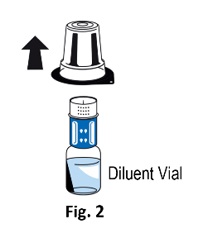 | 3) Open the transfer device package by peeling off the lid.To maintain sterility, leave the Nextaro ® device in the clear outer packaging. The transfer device must be attached to the diluent vial first and then to the lyophilized powder vial. Otherwise, loss of vacuum occurs, and transfer of the diluent does not take place. If diluent is not completely transferred to the lyophilized powder vial during this process, contact Octapharma’s customer service. Place the diluent vial on a level surface and hold the vial firmly. Ensure the Nextaro ® device remains in the outer packaging and invert the Nextaro ® device ensuring the blue part with the water droplets is on top of the diluent vial. Push the Nextaro ® straight and firmly down until it snaps into place (Fig. 1). Do not twist while attaching. While holding onto the diluent vial, remove the outer package from the Nextaro ® , leaving the Nextaro ® attached firmly to the diluent vial (Fig. 2). |
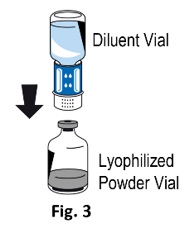 | 4) With the WILATE vial held firmly on a level surface, quickly invert the diluent vial with the Nextaro ® attached. Place the white part of the Nextaro ® on top of the WILATE vial and press down until it snaps into place (Fig. 3). Do not twist while attaching. The diluent will be drawn into the WILATE vial by the vacuum. 5) With both vials still attached, immediately start swirling the powder (WILATE) vial to ensure the powder is fully saturated. A slight whirlpool is formed by swirling. In order to avoid foaming, please do not shake the vial. |
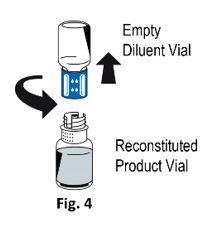 | 6) After 30 seconds, firmly hold both the white and blue parts of the Nextaro ® . Unscrew the Nextaro ® into two separate pieces (Fig. 4) and discard the empty diluent vial and the blue part of the Nextaro ® . Continue swirling until the powder in the WILATE vial has completely dissolved. This process may take several minutes. The final solution is clear or slightly opalescent, colorless or slightly yellow. If the powder fails to dissolve completely or an aggregate is formed, do not use the preparation. |
Administration
For intravenous use after reconstitution only.
- Inspect final solution visually for particulate matter and discoloration prior to administration, whenever solution and container permit.
- Do not mix WILATE with other medicinal products or administer simultaneously with other intravenous preparation in the same infusion set.
- With the WILATE vial still upright, attach a plastic disposable syringe to the Nextaro ® (white plastic part). Invert the system and draw the reconstituted WILATE into the syringe.
- Once WILATE has been transferred into the syringe, firmly hold the barrel of the syringe (keeping the syringe plunger facing down) and detach the Nextaro ® from the syringe. Discard the Nextaro ® (white plastic part) and empty WILATE vial.
- Clean the intended injection site with an alcohol swab.
- Attach a suitable infusion needle to the syringe.
- Measure the patient’s pulse rate before and during the injection. If a marked increase in the pulse rate occurs, reduce the injection speed or interrupt the administration.
- Inject the solution intravenously at a slow speed of 2-4 mL/minute.
- Dispose unused product or waste material in accordance with local requirements.
For more product information on WILATE, please visit www.wilateusa.com
Manufactured by
Octapharma Pharmazeutika Produktionsges.m.b.H., Oberlaaer Strasse 235, A-1100 Vienna, Austria
U.S. License No. 1646
Distributed by
Octapharma USA, Inc., 117 West Century Road, Paramus, NJ 07652
wilate® is a registered trademark of Octapharma.
These Instructions for Use have been approved by the U.S. Food and Drug Administration
Revised: July 2026
Mechanism of Action
WILATE contains von Willebrand factor (VWF) and coagulation factor VIII (FVIII), constituents of normal plasma. VWF promotes platelet aggregation and platelet adhesion on damaged vascular endothelium; it also serves as a stabilizing carrier protein for the procoagulant protein FVIII, an essential cofactor in activation of factor X leading to formation of thrombin and fibrin. Patients suffering from VWD have a deficiency or abnormality of VWF. This reduction in VWF plasma concentration results in correspondingly low FVIII activity and abnormal platelet function, thereby resulting in excessive bleeding. After administration, WILATE temporarily replaces missing VWF and FVIII that are needed for effective hemostasis. When infused into a patient with hemophilia A, FVIII binds to VWF in the patient´s circulation. Activated FVIII (FVIIIa) acts as a cofactor for activated factor IX (FIXa), accelerating the conversion of factor X to activated factor X (FXa). FXa converts prothrombin into thrombin. Thrombin then converts fibrinogen into fibrin and a clot can be formed. Hemophilia A is a sex-linked hereditary disorder of blood coagulation due to decreased levels of FVIII:C and results in profuse bleeding into joints, muscles or internal organs, either spontaneously or as a result of accidental or surgical trauma. By replacement therapy the plasma levels of FVIII are increased, thereby enabling a temporary correction of the factor deficiency and correction of the bleeding tendencies.
